Sunflower Oil Dewaxing Process: Steps, Temperature & Filtration
The sunflower oil dewaxing process step by step: conditioning, controlled cooling, dewaxing temperature, wax crystallization and filtration, with common problems and how to fix them.
- By Eco Plus Filters Engineering
- Updated 2 Oct 2026
- 8 min read
Sunflower oil is valued for its light appearance, neutral taste and versatility, but producing clear refined sunflower oil requires careful control of one important refining stage: dewaxing.
Crude sunflower oil naturally contains waxes originating mainly from the seed hull. These waxes may remain dissolved when the oil is warm but begin to crystallize as the temperature falls. If they are not adequately removed, the finished oil may develop haze, sediment or a cloudy appearance during storage.
The sunflower oil dewaxing process is designed to remove these waxes through controlled cooling, crystallization and filtration.
For edible oil refineries, successful dewaxing is not simply a matter of lowering the oil temperature. Cooling rate, crystallization time, wax characteristics and filtration performance must work together.
This guide explains the sunflower oil dewaxing process step by step, including the role of temperature and modern filtration systems.
What Is Sunflower Oil Dewaxing?
Sunflower oil dewaxing is a refining process in which naturally occurring waxes are crystallized and separated from the oil.
At relatively high temperatures, waxes can remain dissolved and cannot be efficiently removed through normal filtration. By gradually cooling the oil, wax solubility decreases and wax crystals begin to form.
These crystals are then separated from the liquid oil using a suitable filtration system.
In simple terms:
Conditioning → Controlled Cooling → Crystallization → Filtration → Clear Oil
The effectiveness of each stage directly influences the next.
Why Is Dewaxing Important for Sunflower Oil?
The main reason for dewaxing is oil clarity and stability at lower temperatures.
Sunflower oil containing residual wax may look perfectly clear when warm. After packaging or storage in a cooler environment, however, wax can crystallize and create visible haze.
Consumers often associate clear oil with quality, so even harmless wax-related cloudiness can affect product acceptance.
An efficient sunflower oil dewaxing process helps a refinery achieve:
- Clearer finished sunflower oil
- Better appearance at lower temperatures
- Reduced wax-related haze
- More consistent product quality
- Improved downstream filtration
- Reliable preparation for packaging and storage
Dewaxing is therefore an important quality-control stage rather than simply an additional filtration operation.
Step 1: Prepare and Condition the Oil
Before cooling begins, the oil must be properly prepared according to the refinery’s process configuration.
Feed consistency matters because changes in wax concentration, temperature and upstream processing can influence crystallization behaviour.
The plant should maintain controlled process conditions before the oil enters the cooling section.
A consistent feed makes it easier to establish repeatable cooling and crystallization conditions.
Step 2: Controlled Cooling of Sunflower Oil
Temperature control is one of the most critical parts of the sunflower oil dewaxing process.
When sunflower oil is warm, waxes remain dissolved. As the oil temperature decreases, their solubility falls and crystallization starts.
But faster cooling does not automatically mean better dewaxing.
If cooling is too aggressive, the resulting crystals may be small or difficult to separate. Controlled cooling provides conditions in which wax crystals can develop into a form suitable for subsequent filtration.
For this reason, industrial plants normally use a defined cooling profile rather than simply chilling the oil as quickly as possible.
What Is the Correct Sunflower Oil Dewaxing Temperature?
There is no single universal dewaxing temperature that should be applied to every sunflower oil refinery.
The optimum temperature depends on factors including:
- Characteristics of the incoming oil
- Wax concentration
- Previous refining stages
- Cooling system design
- Required finished-oil specification
- Crystallization time
- Filtration technology
In industrial practice, sunflower oil may be progressively cooled into a low-temperature range, often around 5–15°C, to encourage wax crystallization. However, this should be treated as a general processing range rather than a fixed operating specification.
The correct temperature profile should be determined from the actual oil characteristics and refinery process requirements.
This distinction matters because temperature alone does not determine dewaxing performance. Cooling rate and crystallization time are equally important.
Step 3: Wax Crystallization
Once the oil reaches suitable cooling conditions, the wax needs time to crystallize.
This is where the process moves from cooling to actual separation preparation.
Wax molecules begin forming solid crystals. With suitable temperature control and residence time, these crystals develop until they can be efficiently retained by the filtration system.
Important variables include:
Cooling rate: Influences how crystallization begins.
Holding time: Gives crystals sufficient opportunity to develop.
Agitation: Should support uniform cooling without unnecessarily damaging developing crystals.
Final temperature: Helps determine how much wax comes out of solution.
Poor crystallization can create difficulties at the filtration stage, even when the filter itself is operating correctly.
Step 4: Filtration of Crystallized Wax
Once sufficient wax crystals have formed, the oil moves to sunflower oil filtration.
The filtration system must retain crystallized wax while allowing clarified sunflower oil to pass through.
This stage can significantly influence plant productivity.
If the filtration process is slow, labour-intensive or requires frequent cleaning, the benefits of good crystallization can be reduced by operational bottlenecks.
Refineries should therefore evaluate filtration based on more than filtration accuracy alone.
Important considerations include throughput, operator involvement, cleaning requirements, oil handling, wax discharge and overall cycle time.
Gravity Filtration for Sunflower Oil Dewaxing
Gravity-based filtration provides an alternative approach for separating crystallized wax after sunflower oil has been properly cooled and conditioned.
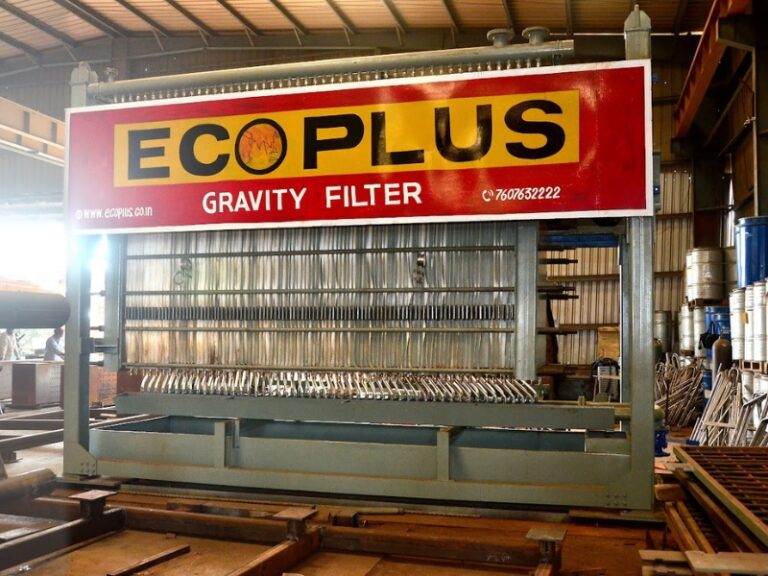
The Eco Plus Automatic Gravity Filter is designed for edible oil dewaxing and winterization applications, including sunflower oil processing.
Instead of depending heavily on manual filter handling, an automated gravity filtration system can provide a more controlled filtration cycle.
Key operational advantages can include:
Automatic Filtration
Automation reduces the need for continuous operator involvement during normal filtration cycles.
Automatic Wax Discharge
Separated wax can be discharged automatically, reducing repetitive manual cake-handling operations.
Self-Cleaning Operation
Automatic cleaning helps prepare the filtration surface for subsequent cycles and can reduce manual cleaning requirements.
Enclosed Processing
An enclosed filtration arrangement can help reduce unnecessary oil exposure, handling and spillage.
Lower Pressure Requirement
Gravity-based filtration can reduce dependence on high filtration pressure, supporting a simpler approach to the wax separation stage.
For a refinery operating continuously, these operational improvements can be particularly valuable.
Sunflower Oil Dewaxing vs. Winterization
Dewaxing and winterization are closely related processes, and the terminology is sometimes used differently across the edible oil industry.
Both rely on cooling oil to crystallize components that remain liquid at higher temperatures and then separating those solids through filtration.
For sunflower oil, the primary focus is typically the removal of waxes that can cause haze.
Regardless of terminology, effective processing requires the same basic relationship:
controlled cooling + crystal development + efficient filtration.
Common Problems During Sunflower Oil Dewaxing
Oil Becomes Cloudy After Processing
This can occur when wax removal is incomplete or some wax remains dissolved during filtration and crystallizes later.
Filtration Becomes Too Slow
Poorly developed crystals or excessive solids loading can restrict oil flow through the filtration surface.
Wax Passes Through the Filter
Very fine or inadequately developed crystals may be more difficult to retain effectively.
Excessive Oil Remains with the Wax
Poor filtration or wax discharge conditions can result in valuable oil leaving the process with the separated solids.
High Manual Handling
Frequent filter opening, cleaning and cake removal can increase manpower requirements and extend production cycles.
These problems should be investigated across the complete dewaxing process rather than blaming the filtration system alone.
How to Improve Sunflower Oil Dewaxing Efficiency
A reliable sunflower oil dewaxing process begins with consistent process control.
Maintain stable incoming oil conditions, establish an appropriate cooling profile and provide sufficient crystallization time. Avoid treating the lowest possible temperature as the primary target.
Most importantly, cooling and filtration should be designed as connected operations.
The filtration system must be capable of handling the wax crystals produced by the upstream process without creating unnecessary downtime or manual intervention.
For plants upgrading older filtration arrangements, automation can also help create more repeatable operating cycles.
Choosing a Sunflower Oil Filtration System
Before selecting filtration equipment, refinery operators should evaluate:
- Daily processing capacity
- Incoming wax content
- Required oil clarity
- Operating temperature
- Filtration cycle time
- Available plant space
- Labour requirements
- Cleaning frequency
- Wax discharge system
- Oil-loss potential
- Utility requirements
- Integration with existing equipment
Purchase price alone does not determine the actual value of a filtration system. Long-term manpower, maintenance, cleaning, utilities and production downtime should also be considered.
Conclusion
The sunflower oil dewaxing process is essential for removing naturally occurring waxes that can cause haze and cloudiness in refined sunflower oil.
Effective dewaxing follows a logical sequence: prepare the oil, cool it under controlled conditions, allow wax crystals to develop and then separate those crystals through efficient filtration.
Temperature is important, but it should never be considered in isolation. Cooling rate, crystallization time, oil characteristics and filtration performance collectively determine the final result.
For edible oil refineries seeking to automate the filtration stage, the Eco Plus Automatic Gravity Filter provides an enclosed gravity-based solution designed for dewaxing and winterization applications.
By combining controlled crystallization with efficient filtration, sunflower oil processors can work toward clearer oil, more consistent operation and a better-managed dewaxing process.
Planning sunflower oil dewaxing?
Send your oil type, plant capacity and current filtration method. A filtration engineer will reply with a first technical view.