Edible Oil Filtration Technology

Automated Gravity Filtration for Smarter Edible Oil Processing

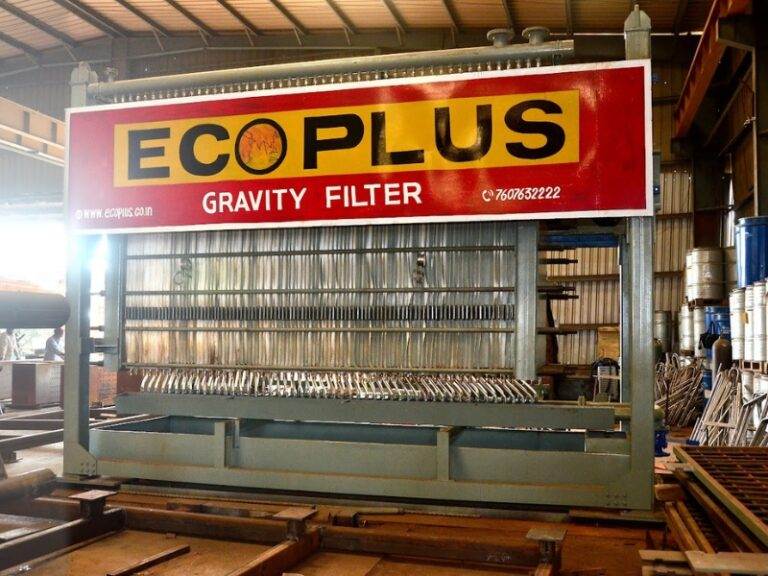
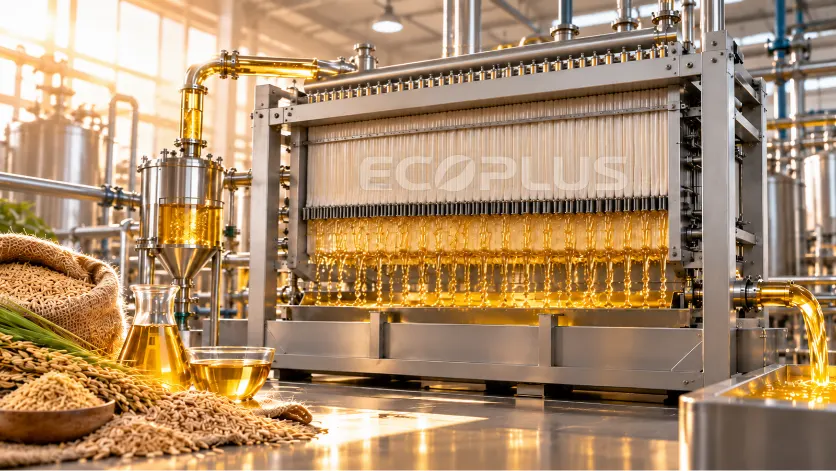
Eco Plus Gravity Filters are engineered for efficient edible-oil dewaxing and winterization using a closed, low-pressure filtration system designed to reduce manual handling, improve process control and simplify filtration operations.

EPF—AGF Series

Suitable for: Rice Bran • Sunflower • Corn • Cottonseed • Sesame • Safflower

Filtration That Works Harder, So Your Team Doesn’t Have To.

Eco Plus Gravity Filters bring automation and containment to edible-oil filtration, helping plants improve productivity, cleanliness and turnaround with less manual effort.

01

Automated Operation

Feed, filtration, discharge and cleaning run in sequence, reducing hands-on work for operators.

02

Clean, Closed System

Enclosed filtration keeps oil contained, supporting a cleaner plant floor and fewer handling losses.

03

Faster Turnaround

Automated cleaning prepares the system for the next batch, helping keep downtime short.

04

Consistent Results

Controlled, repeatable cycles deliver steady filtration quality batch after batch.

Built around automation, containment and operational simplicity for modern edible-oil plants.

Product / EPF—AGF

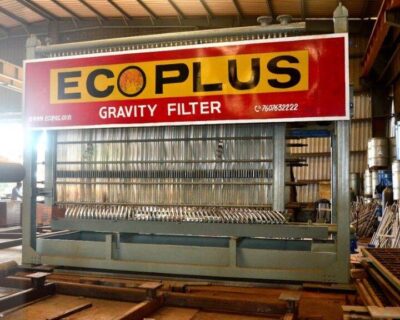
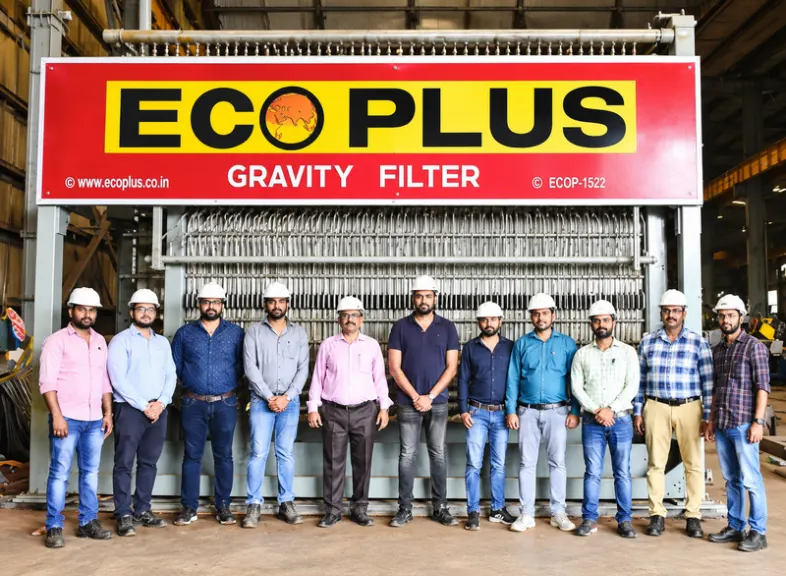
Meet the Eco Plus Automatic Gravity Filter

A closed-system filtration solution developed for edible-oil dewaxing and winterization applications.

01

Feed System

Winterized oil enters the chamber under controlled flow.

02

Filter Bed

Media retains wax and stearin while clarified oil passes.

03

Wax Retention Zone

Solids collect in a defined zone for a stable cycle.

04

Heating System

Steam heating supports viscosity control.

05

Oil Outlet

Clarified oil returns to the refining line.

06

Cleaning Mechanism

Automated cleaning prepares the next batch.

07

Discharge System

Wax and stearin are discharged in a contained way.

08

Control Panel

Sequences feed, filtration, discharge and cleaning.

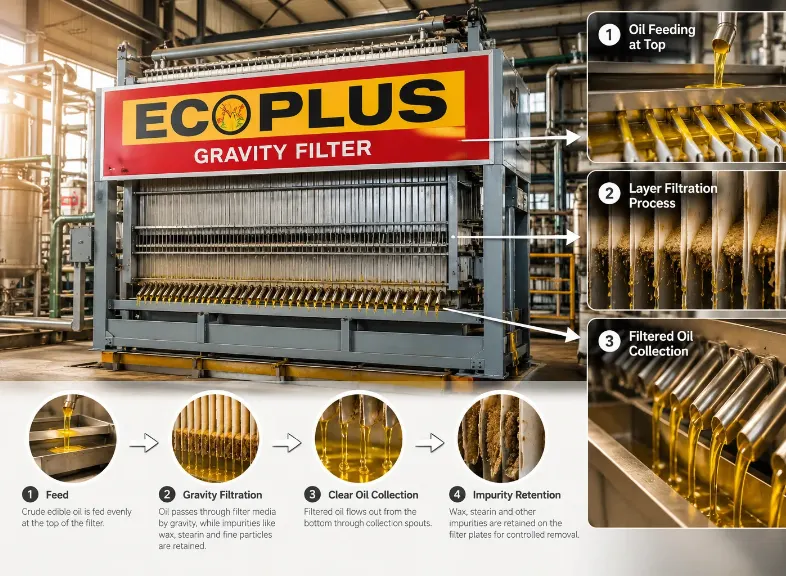
Process

From Cloudy Winterized Oil to Controlled Filtration

Step 01

Feed oil enters the filtration system.

Step 02

Low-pressure gravity filtration begins.

Step 03

Wax and stearin are retained by the filter media.

Step 04

Clarified oil exits the filtration chamber.

Step 05

Accumulated solids are discharged.

Step 06

Cleaning cycle prepares the system for the next batch.

Engineered for Multiple Edible-Oil Applications

Different oils present different wax, stearin and cold-clarity challenges. Eco Plus filtration systems can be configured according to oil characteristics and plant requirements.

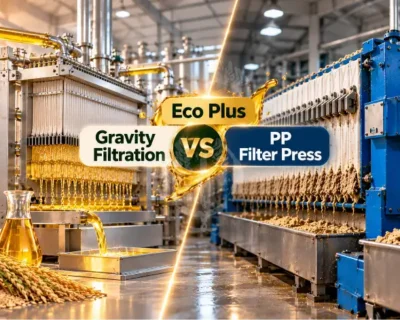
Rethink Conventional Filtration

Parameter

Conventional PP Filter Press

Eco Plus Gravity Filter

Operation

Higher manual intervention

Automated process control

System Design

Open/manual handling

Closed filtration approach

Cleaning

Manual cleaning process

Automated/self-cleaning cycle where applicable

Operator Dependency

Higher

Reduced

Oil Handling

Greater open handling exposure

Controlled enclosed handling

Turnaround

Can require longer cleaning/resetting

Designed for simplified cycle turnaround

Footprint

Can require larger operational area

Compact engineered configuration

Comparison reflects typical operating practice and may vary with plant configuration, oil type and existing equipment condition.

Engineering Data

Designed Around Process Conditions

Operating pressure
0.1–0.6 bar

Low-pressure gravity filtration range.

Filtration area
Configurable

Sized to plant capacity and cycle time.

Operating temperature
Process-defined

Set by the winterization regime.

Steam pressure
Up to 3 bar

For heating and discharge assistance.

Cycle duration
8–10 hours

Typical filtration turnaround.

Filter media
Woven cloth

Selected by oil and wax characteristics.

Automation
PLC sequenced

Varies by model and configuration.

Oil compatibility
6+ oil types

Rice bran, sunflower, corn, cottonseed, sesame, safflower.

Automation & Control

Less Manual Intervention. More Process Control.

Eco Plus Gravity Filters are designed around an automated filtration sequence that helps reduce dependence on repetitive manual activities.

01

Automatic cycle control

Feed, filtration and discharge steps run in sequence.

02

Process monitoring

Key parameters are visible to the operator during the cycle.

03

Cleaning sequence

Filtration surface preparation between batches.

04

Controlled discharge

Contained removal of retained wax and stearin.

Automation functionality may vary by model/configuration.

Engineering Beyond the Equipment

A filtration system must perform reliably within the realities of industrial production. Eco Plus combines engineering, fabrication, assembly, quality control, installation and commissioning support to deliver application-specific filtration systems.

01

Engineering

Application-specific system design.

02

Fabrication

In-house structural and vessel work.

03

Assembly

Mechanical and piping assembly.

04

Quality Inspection

Stage-wise dimensional and weld checks.

05

Testing

Functional and control-panel testing.

06

Installation

Site coordination and erection support.

07

Commissioning

Start-up and operator handover.

08

After-Sales Support

Spares, service and troubleshooting.

Discuss Your Filtration Requirement

Planning a New Filtration System or Upgrading an Existing One?

Share your oil type, plant capacity and existing filtration process. Our team can review the application and suggest a suitable filtration configuration.

Your details are used only to prepare a filtration proposal. No marketing lists.

Scroll to Top